 vibgg
vibgg
Guides · 3 min read
Maker vs taker fees: what crypto traders actually pay
Understand when an order earns maker treatment, when it pays taker fees, and why order type alone does not guarantee the cheaper rate.
·
Most crypto exchanges quote two trading-fee rates: maker and taker. The difference is not simply limit order versus market order. It depends on whether an execution adds resting liquidity to the order book or removes liquidity that is already there.
What makes an order a maker or a taker?
An order is normally a maker when it rests on the book before another trader matches it. A buy limit below the current best ask or a sell limit above the current best bid can do this. The exchange receives new quoted liquidity, so the maker rate is often lower.
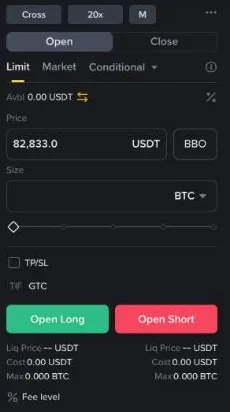
An order is a taker when it immediately matches an existing order. Market orders are takers, but a marketable limit order is also a taker: a buy limit priced at or above the best ask can execute immediately even though its order type says “limit.”
One order can pay both rates
A large limit order may execute partly on arrival and leave the remainder resting. The immediate portion is charged as taker volume; any later execution of the resting portion may receive maker treatment. For an accurate record, calculate fees per fill rather than assigning one rate to the entire order.
trading fee = value of the filled trade × fee rate that applies
If $8,000 fills at a 0.05% taker rate and the remaining $12,000 later fills at a 0.02% maker rate, the total opening fee is $6.40. Closing the position creates another set of fills and fees.
Post-only helps, but does not promise a fill
A post-only instruction prevents the order from executing immediately as a taker. Depending on the exchange, a marketable post-only order is rejected or repriced. This protects the fee classification, but introduces execution risk: the market can move away, the position may remain open, or only part of the desired size may fill.
The lowest displayed maker fee is therefore not automatically the lowest economic cost. Waiting for a maker fill can cost more through adverse price movement than the taker-fee saving. Rebates can also encourage quoting precisely when informed traders are likely to trade against the resting order.
Maker and taker fees on each exchange today
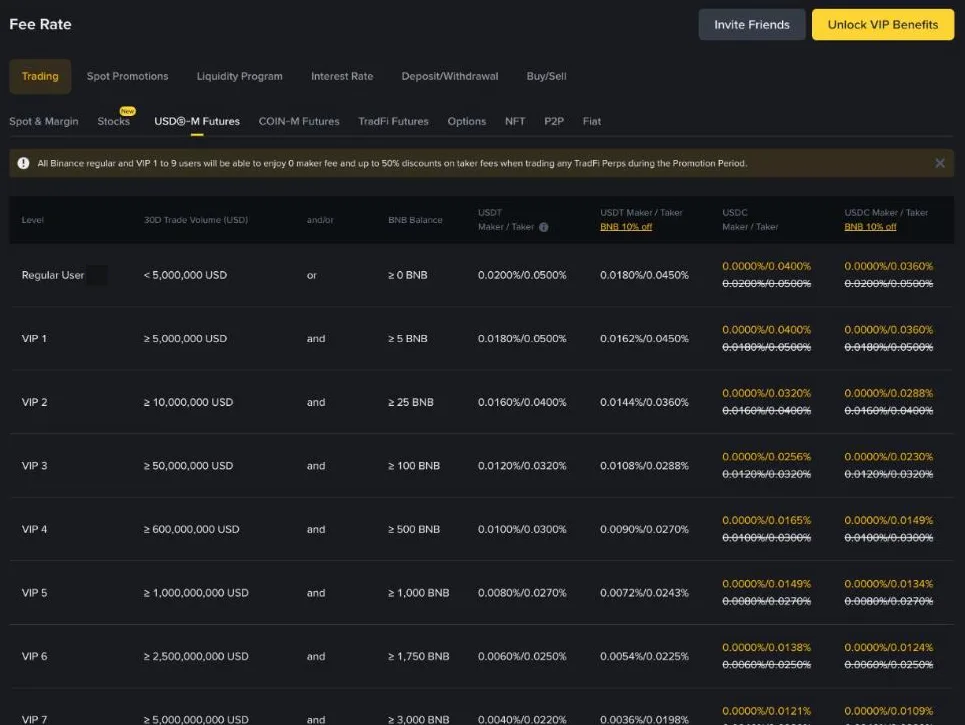
Standard VIP 0 fees for USDT-margined perpetual futures, from each exchange's official fee page. The table updates whenever a fee level is re-checked.
At this level a taker order typically costs two and a half to three times as much as a maker order of the same size, which is why the order type you use often matters more than which exchange you pick.
Compare the full round trip
- Use the fee tier that applies to the account, not only the exchange's headline tier.
- Estimate maker and taker shares for both entry and exit.
- Add spread and likely slippage.
- Add funding for every settlement the perpetual position may cross.
- Include discounts only when the account is actually eligible.
The futures fee comparison lists every exchange's maker and taker fees at each VIP level. To combine a round trip with funding and spread, use the futures trading cost calculator.